

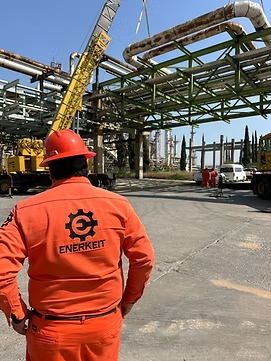
Expansion joints in Mexico
300

Below, you will find the key industries where expansion joints play an essential role.
Expansion joints are indispensable across numerous industries because they absorb movement, vibration, and thermal expansion in piping systems and ductwork. Their proper use ensures operational safety and efficiency while reducing the risk of structural damage and extending the service life of industrial installations.
In paper and board manufacturing, expansion joints handle high-temperature fluids and steam systems, absorbing thermal expansion in ducts and equipment and preventing damage caused by heat and sustained pressure.
Pipes in this industry carry liquids and gases across a wide temperature range, making metallic and rubber expansion joints essential for maintaining a tight seal and preventing leaks. Typical applications include pasteurization, cooking, and fluid transport systems.
Cement manufacturing involves high temperatures and constant movements in structures. Fabric or textile type expansion joints are indispensable in ducts that transport hot air and combustion gases, while metallic ones are used in systems operating at high pressure.
In power generation facilities, particularly thermal power plants, expansion joints accommodate thermal expansion in steam and high-pressure piping. They are equally essential in combined-cycle plants and hot water distribution systems.
Metallic expansion joints are vital for handling chemical products, gases, and corrosive fluids at high temperatures and pressures. They are used in processing, refining, and hydrocarbon transport systems, where resistance and safety are key.
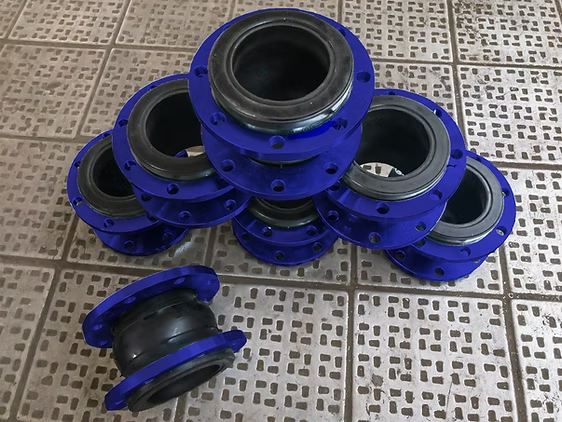
In these facilities, expansion joints are used to absorb vibrations and movements in pipes that transport water and chemical products. Rubber joints are common due to their resistance to corrosion and ability to withstand pressure variations.
During the glass manufacturing process, extreme temperatures generate constant movements in installations. Expansion joints, especially fabric type, help manage thermal expansion in hot gas transport systems.
Sign in with Google to join the conversation.